Trip toolkitAffiliate linksFull toolkit

Some links on this page are affiliate links. If you book through them we may earn a commission, at no extra cost to you. Affiliate disclosure
On this page
Lemnos (Greek Limnos, Turkish Limni), south-west of Çanakkale in the northern Aegean, is a large island known for its wide beaches and quiet villages. For Turkish readers two links stand out: Mudros Harbour, the Allied base in the Gallipoli campaign, and the Armistice of Mudros that the Ottoman Empire signed in 1918. In summer 2026 direct ferry sailings from Çanakkale’s Kepez Port to the island ran for the first time; however, although the island is on the visa-on-arrival list, we could not confirm with an independent source that the visa was actually issued on Lemnos in 2026.
Short answer
- Getting there: In 2026 a passenger catamaran ran on the Çanakkale (Kepez) – Myrina line a few days a week through the summer season; it took no vehicles and the crossing was about 2.5 hours. Details in our Çanakkale–Lemnos ferry guide.
- Day trip: No. In the 2026 timetable the outbound and return sailings were on different days, so you need to stay at least one night.
- What to see: Myrina castle and town, the Bronze Age settlement of Poliochni, ancient Hephaistia and Kabeirion, the Commonwealth war cemeteries at Mudros, the Gomati sand dunes, Lake Aliki.
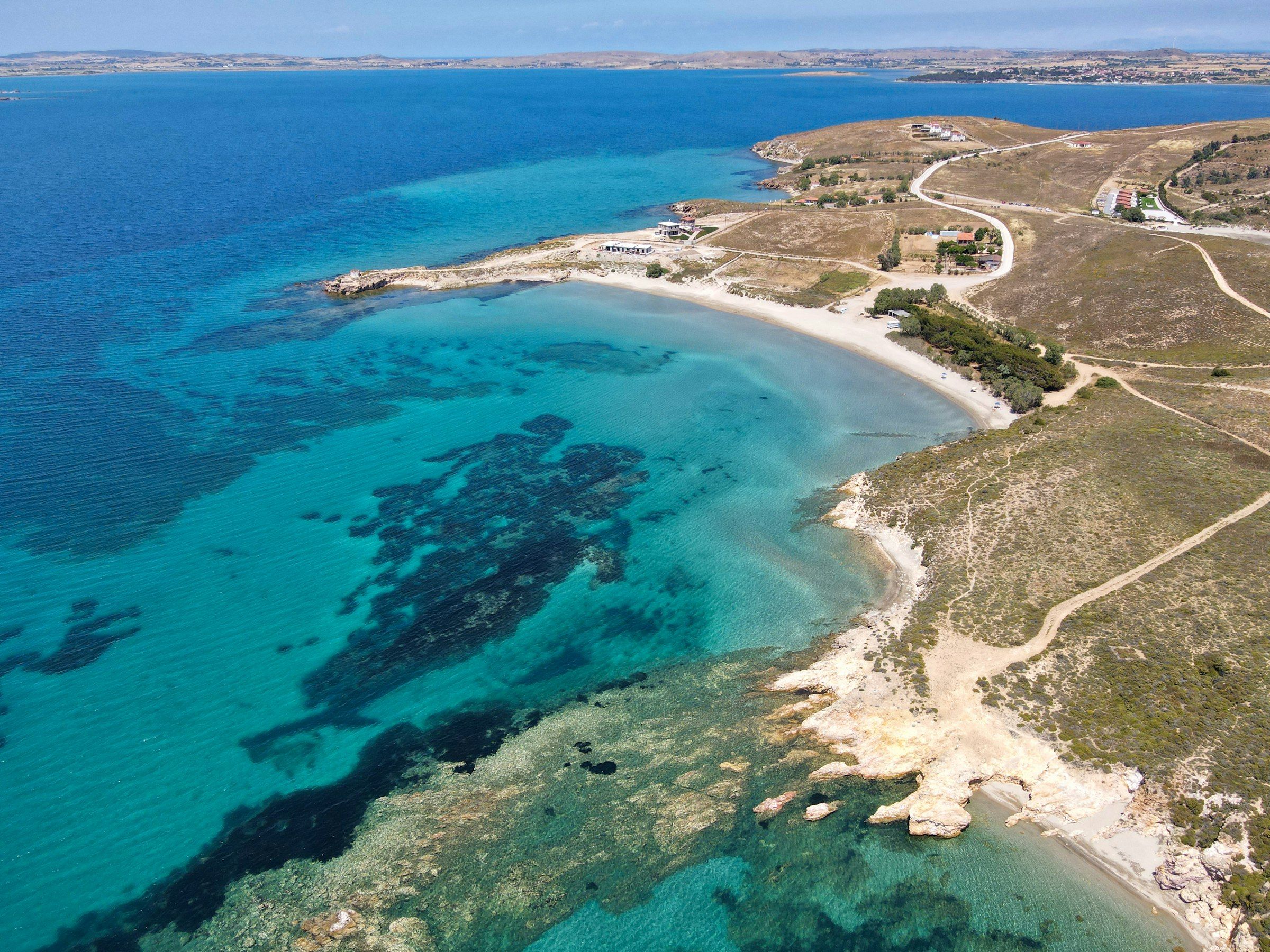
- Sea: Many sandy, shallow beaches; Plati, Thanos, Evgati and Richa Nera in Myrina stand out.
- Visa: Lemnos is one of the 12 islands in the visa-on-arrival programme, but we could not confirm that it was actually applied in Myrina in 2026. Ask the operator in writing before you go.
- Getting around: The sights are far apart; renting a car or taking a taxi is the most practical way.
Things to see
The island is large and the sights are scattered. Myrina is on the west coast, Poliochni on the east coast, Mudros on the east side of the bay of the same name; the sand dunes and Lake Aliki are in the north.
Myrina castle
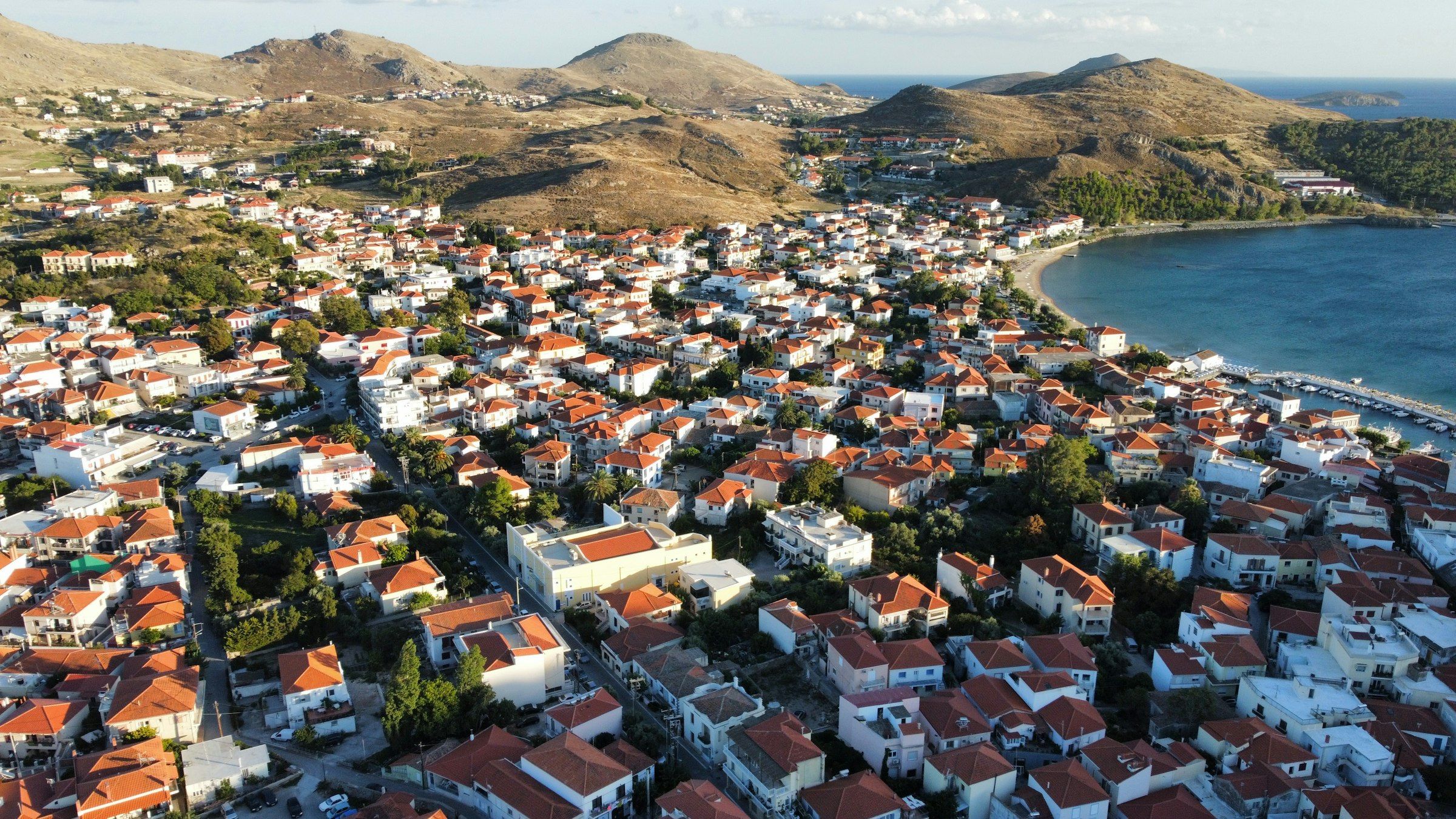
Myrina, the island’s main town, sits at the foot of a castle on a rocky peninsula that juts into the sea. The castle is entered from the east, the only side where it joins the land. According to sources, traces of a much older wall exist on the site; the Byzantine emperor Andronikos Komnenos strengthened the medieval castle in the 12th century, the Venetians rebuilt it after 1207, and most of its present appearance goes back to the Genoese Gattilusio period and later Venetian and Ottoman additions. It was badly damaged in the Russian siege of 1770; Cezayirli Gazi Hasan Pasha had it partly repaired in 1780.
Today the castle is empty, but it is known for the deer that roam freely inside. According to Greeka, you reach the castle from the town by a path of about 20 minutes. Discover Greece names the view from the top as one of the best on the island. We could not find official information on the entrance fee or opening hours.
Myrina town: Romeikos Gialos and Tourkikos Gialos
The town spreads on both sides of the castle. Romeikos Gialos (the Greek shore) and Tourkikos Gialos (the Turkish shore, today also called Limani or the harbour) take their names from the quarters where the two communities lived in the Ottoman period. Along Romeikos Gialos stand the mansions built by islanders who grew rich in Egypt and came back. The Richa Nera beach right next to the town can be reached on foot.
Archaeological Museum of Lemnos
Near Romeikos Gialos, in a building from the Ottoman period; it opened in 1993. Alongside finds from Myrina, it shows objects from the Italian Archaeological School’s excavations at Poliochni, Hephaistia and Kabeirion, and ancient pieces brought from Imbros (Gökçeada). Stopping here before you visit the ancient sites on the island makes the remains easier to understand. The opening-hours information we could find dates from 2021 and is not current; check locally before you go.
Poliochni
A prehistoric settlement on a hill on the east coast, overlooking Vroskopos bay. Its first phase is dated from the end of the 4th to the start of the 3rd millennium BC; the Italian excavations took place in the 1930s and 1950s. Archaeologists name the layers by colours (black, blue, green, red, yellow). Among the surviving remains are a defensive wall, stone-paved roads with drainage, wells, stone houses in blocks, and a rectangular assembly building with stepped seating, which some sources interpret as an early council building. The site reopened in December 2025 after restoration carried out by the Ministry of Culture. You can swim at the nearby Kokkinovrachos (Red Rock) beach. We could not find an official source for current visiting hours and fees; ask locally before you go.
Hephaistia
An ancient city founded on a peninsula that controls two natural harbours. It takes its name from Hephaistos, the god of fire and metalworking. According to the excavations, the city flourished from the 7th century BC to the 1st century BC and kept its importance in the Byzantine period. Today the Hellenistic-period theatre draws the most attention; there are also temple and house remains. The silting up of the harbour played a part in the city’s abandonment.
Kabeirion and the Philoctetes cave
Near Hephaistia, the sanctuary of the Kabeiroi stands on a steep slope running down to the sea at Cape Chloi. According to the Ministry of Culture’s platform, the sanctuary was in use from the 8th century BC to late antiquity and was one of the important centres of mystery cults in the ancient world. A narrow passage beside the temple leads down to a sea cave known as the Philoctetes cave. A “Philoctetes” performance was on the programme at the site in August 2026.
Mudros and the Gallipoli connection
Mudros (Greek Moudros) is the island’s second-largest settlement, on the shore of the large, sheltered bay of the same name. According to the Commonwealth War Graves Commission (CWGC), the island was occupied on 23 February 1915 by a marine unit in preparation for the Gallipoli landings, and Mudros became a large Allied camp. Canadian and Australian military hospitals and other medical units were stationed on both sides of the bay. The Armistice of Mudros between the Ottoman Empire and the Allied powers was also signed here on 30 October 1918.
There are two CWGC cemeteries on the island:
| Cemetery | Location | Period of use | According to CWGC |
|---|---|---|---|
| East Mudros Military Cemetery | About 1 km north-east of Mudros village | April 1915 – September 1919 | 885 First World War Commonwealth burials (86 unidentified) and 32 burials of other nationalities (29 of them Russians who died in 1921) |
| Portianos Military Cemetery | West side of Mudros bay, at the edge of Portianos village | August 1915 – August 1920 | About 350 Commonwealth burials (the page gives two figures, 346 and 347) |
According to New Zealand’s official history site, 47 soldiers of the New Zealand Expeditionary Force lie in East Mudros; most died after being wounded or falling ill at Gallipoli. The cemeteries are quiet, well-kept places; take care over dress and behaviour when you visit. The operator of the line from Çanakkale has announced that it plans Anzac tours combining Çanakkale and Lemnos for 2027.
Gomati sand dunes (Ammothines)
Sand dunes in the north of the island near the village of Katalakkos, known locally as Ammothines. They were formed by sand carried by north-easterly winds from the surrounding sedimentary rocks; the sparse vegetation includes lilies, chaste tree, thyme and oleander. Sources give inconsistent figures for the size of the area. According to Visit Greece, entry is free; it is about 45 minutes by car from Myrina harbour. The last stretch is a dirt road. The nearby Gomati beach is wide and shallow; people kitesurf there on windy days. Discover Greece recommends bringing a hat and water.
Lake Aliki and the flamingos
Aliki in the north is a wetland where salt used to be extracted and which is now protected. According to Discover Greece, it is one of the largest seasonal gathering places for flamingos in Greece and a stopover for migratory birds in spring and autumn. The Keros beach right next to it is the island’s wind and kitesurfing spot.
Beaches
Most of Lemnos’s beaches are sandy and shallow, and many suit families with children. Highlights from Discover Greece’s list:
- Richa Nera: Inside Myrina, sandy, Blue Flag.
- Plati: About 2 km from Myrina, around 700 metres of fine sand, Blue Flag.
- Thanos and Evgati (Nevgati): Thanos is in a bay sheltered from the wind; Evgati is one of the island’s biggest beaches and lies on the road to Thanos.
- Agios Ioannis: Next to the village of Kaspakas, with volcanic rock formations.
- Megalo and Mikro Fanaraki: Near Mudros, fine sand and shallow water.
- Zematas and Gomati: Zematas is near the village of Panagia, Gomati near Katalakkos; both are reached by dirt road.
When the north winds blow, some beaches get choppy; for such days Discover Greece points to sheltered bays such as Thanos. If you are going with children, see also our guide to the Greek islands with kids.
Wine and local products
Lemnos is one of Greece’s well-known wine islands. According to Wines of Greece, the “PDO Limnos” region was defined in 1982; whites are made from Muscat of Alexandria (Moschato) and reds from the island’s local grape Limnio (locally Kalambaki). Most vineyards are in the wind-sheltered central and southern parts, around Atsiki, Mudros and Nea Koutali. The island is also known for its sweet Muscat wine. Local products include the protected kalathaki Limnou cheese, handmade flomaria pasta and honey. If you buy wine, check the alcohol limits for your return to Turkey in our customs guide.
Getting there
In 2026 the only direct connection from Turkey to Lemnos was the passenger catamaran that Limni Express ran from Çanakkale Kepez Port to Myrina. The first (inaugural) sailing took place on 21 June 2026. According to the intermediary site feribotseferleri.com.tr, the regular season ran from 15 July to 20 September: departures from Kepez on Monday, Thursday and Saturday at 10:00, returns from Myrina on Wednesday, Friday and Sunday at 16:00. The crossing takes about 2.5 hours; vehicles are not carried.
As of October 2026 the season has closed and the 2027 timetable has not been announced. For fares, documents and the contradictions between sources, see our Çanakkale–Lemnos ferry guide; for other lines, see the ferry map.
Lemnos can also be reached from mainland Greece by ferry and plane, but entering that way requires a Schengen visa; the visa on arrival applies only to entry by direct ferry from Turkey.
Getting around the island
- Bus: According to Greeka, the main bus stop is in Myrina and the lines serve many villages; the airport line is not timed to flights. Ask for the current timetable at the stop.
- Taxi: Found in the centre of Myrina.
- Car rental: There are rental offices on the island. This is the most practical way to reach the sand dunes, Poliochni, Hephaistia and the northern beaches. Ask the company about rental conditions for a Turkish driving licence in advance; because the 2026 line did not carry vehicles, you cannot bring your own car. For general information see our guide to taking a car to the Greek islands.
From Myrina to the Gomati sand dunes it is about 45 minutes by car (Visit Greece). Giving one day to Poliochni and the Mudros cemeteries and one day to Hephaistia, Kabeirion, Aliki and Gomati is a sensible plan; check the distances on a map before you go.
Car hire: Lemnos
DiscoverCars compares offers from several rental companies in one search. Check the pick-up point, deposit and insurance terms before you book.
Visa on arrival and entry
Lemnos is one of the 12 islands in the 7-day visa-on-arrival programme open to Turkish citizens. The visa is single-entry, valid only on the island where you enter, and you must also return from the same island; you cannot go on from Lemnos to Samothrace or to the mainland. The programme was extended for one year from 1 April 2026. This section applies to Turkish passport holders; check the entry rules for your own nationality.
Note: In April 2026 To Vima wrote that the programme was not yet working in practice on Lemnos because there was no functioning entry gate and ferry connection. The intermediary site feribotseferleri.com.tr writes that the visa is processed in the passport at Myrina, but it cites no official source; we could not confirm this with the Greek authorities or independent press. Greek and Turkish news reports on the opening of the line also do not mention the visa at all. If you are planning to go on a visa on arrival, ask the operator to confirm in writing that the visa is issued at Myrina.
Because accommodation is mandatory, the application needs a paid hotel reservation. For the fee, documents, application time and obstacles such as the TRNC stamp, see our visa-on-arrival guide (in Turkish). If you hold a valid Schengen visa, this issue does not concern you.
Greece uses the euro; for money and mobile data, see our page on money and mobile data on the Greek islands.
Where to stay
In the 2026 timetable the outbound and return sailings were on different days, so you have to stay on the island at least one night. Because the catamaran docks at Myrina, staying in Myrina is the most practical choice if you travel without a car.
Hotels and rooms on Lemnos
See which hotels, guesthouses and apartments on the island are free for your dates, with a map view, on Booking.com. On small islands rooms run out early in high summer.
When to go
Direct transport from Turkey in 2026 ran only from mid-July to mid-September, so the ferry calendar largely decides your trip. You can see month by month which line runs in our ferry season calendar.
- July–August: The sea is warmest and the beaches are liveliest. The meltem can make the northern coasts choppy and affect sailings: in 2026 outbound sailings were cancelled because of weather between 28 July and 3 August.
- September: Calmer weather, good for walking. In 2026 the last sailing was on 20 September.
- Spring and autumn: Good times for birdwatching at Aliki, but there was no direct connection from Turkey in these months in 2026.
Mind the time difference: in summer time Greece and Turkey use the same time; from the end of October to the end of March Greece is one hour behind Turkey.
Trip toolkit
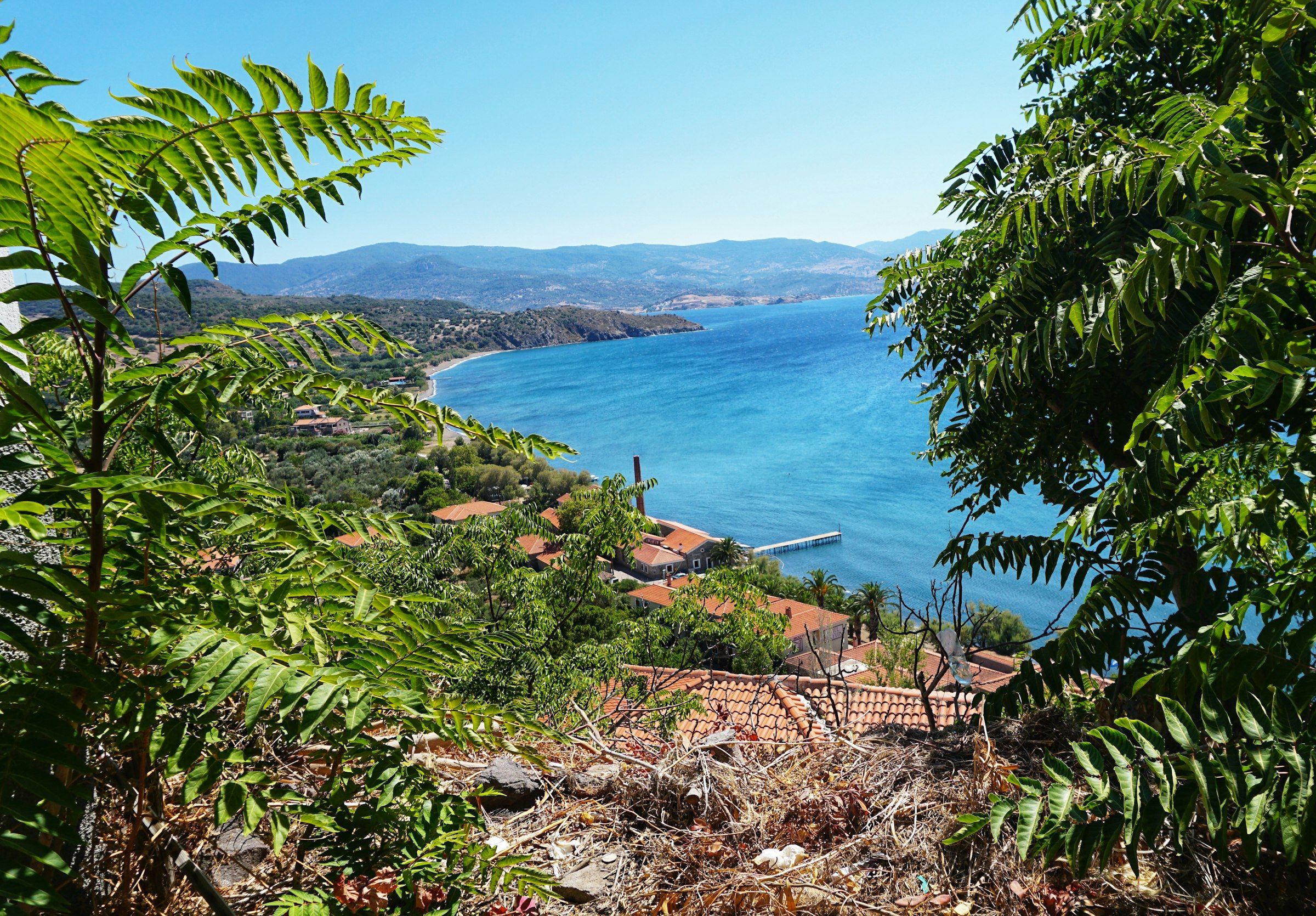
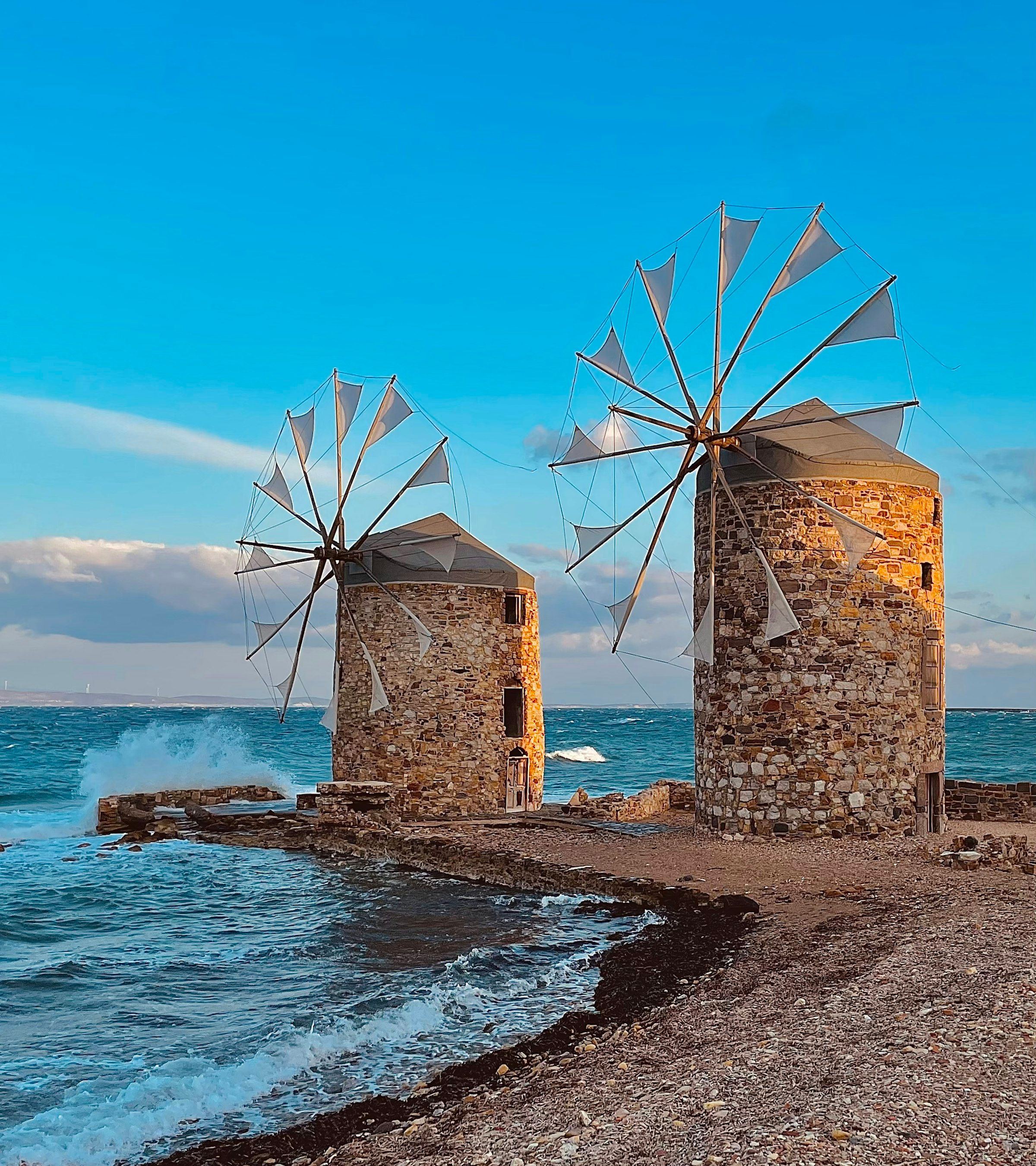
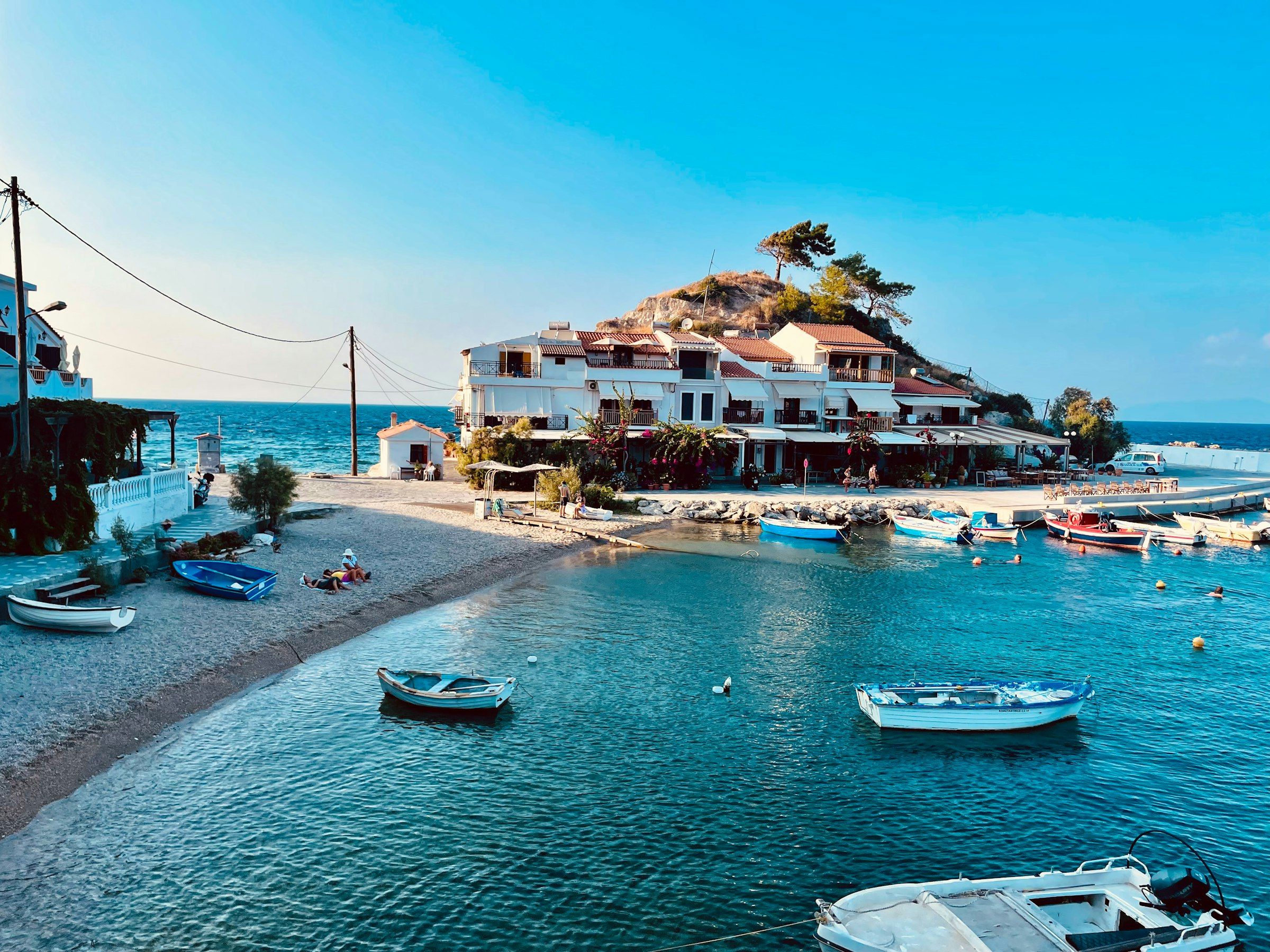
Links in this section are affiliate links: we may earn a commission if you book, at no extra cost to you. Prices and terms are set by the provider.
FAQ
Can you visit Lemnos as a day trip?
Not with the 2026 timetable. Outbound sailings were on Monday, Thursday and Saturday and returns on Wednesday, Friday and Sunday; the shortest option was one night.
Is the visa on arrival definitely issued on Lemnos?
We could not confirm it. The island is on the programme list, but in April 2026 it was reported that the scheme was not yet working on the island, and we found no official statement afterwards that changed this. Ask the operator for written confirmation.
Can I take my car to Lemnos?
Not in 2026. The catamaran on the Çanakkale line carried no vehicles. You can rent a car on the island.
What is there to see on the island connected with Gallipoli?
Mudros bay, the Commonwealth war cemeteries at East Mudros and Portianos, and the harbour where the Armistice of Mudros was signed. The cemeteries are maintained by the CWGC.
Can I go from Lemnos to another Greek island?
Not on the visa on arrival; the visa is valid only on the island where you enter. If you hold a Schengen visa, there are ferries and flights from the island to the mainland and to other islands. To decide which island suits you, see our which island page.
Sailing times, fares and entry rules can change; check an official source before you travel.
Sources
- CWGC: East Mudros Military Cemetery (accessed October 2026)
- CWGC: Portianos Military Cemetery (accessed October 2026)
- NZHistory (New Zealand Ministry for Culture and Heritage): East Mudros Military Cemetery (accessed October 2026)
- Hellenic Ministry of Culture, All of Greece One Culture: Kabeirion (accessed October 2026)
- Visit Greece: the sand dunes of Limnos (accessed October 2026)
- Lemnos Geomonuments: Gomati sand dunes (accessed October 2026)
- Lemnos Geomonuments: Poliochni (accessed October 2026)
- Lemnos Geomonuments: Hephaistia (accessed October 2026)
- Lemnos Geomonuments: Archaeological Museum of Lemnos (accessed October 2026)
- Greek Reporter: Greece reopens Poliochni (2 December 2025) (accessed October 2026)
- Ypsipyli Project: the history of Myrina castle (accessed October 2026)
- Greeka: Myrina castle (accessed October 2026)
- Greeka: transport on Lemnos (accessed October 2026)
- Discover Greece: 10 unforgettable things to do on Lemnos (accessed October 2026)
- Discover Greece: the 10 best beaches on Lemnos (accessed October 2026)
- Wines of Greece: PDO Limnos (accessed October 2026)
- To Vima: Visa express extended to 2027, not yet working on Lemnos (23 April 2026) (accessed October 2026)
- Euronews Türkçe: Visa on arrival extended by another year (31 March 2026) (accessed October 2026)
- Milliyet / AA: Çanakkale–Lemnos ferry sailings begin (21 June 2026) (accessed October 2026)
- Proto Thema: Lemnos–Çanakkale first sailing (21 June 2026) (accessed October 2026)
- Feribotseferleri: Çanakkale–Lemnos sailing days changed (27 June 2026) (accessed October 2026)
- Feribotseferleri: Sailing cancelled due to bad weather (July 2026) (accessed October 2026)
- Feribotseferleri: Lemnos visa on arrival 2026 (28 June 2026) (accessed October 2026)
- Dnews: Lemnos–Çanakkale connection begins (21 June 2026) (accessed October 2026)
- timeanddate.com: Greece 2026 time change (accessed October 2026)
- timeanddate.com: Turkey time zone (accessed October 2026)
Was this page helpful?
No name or email needed. ›