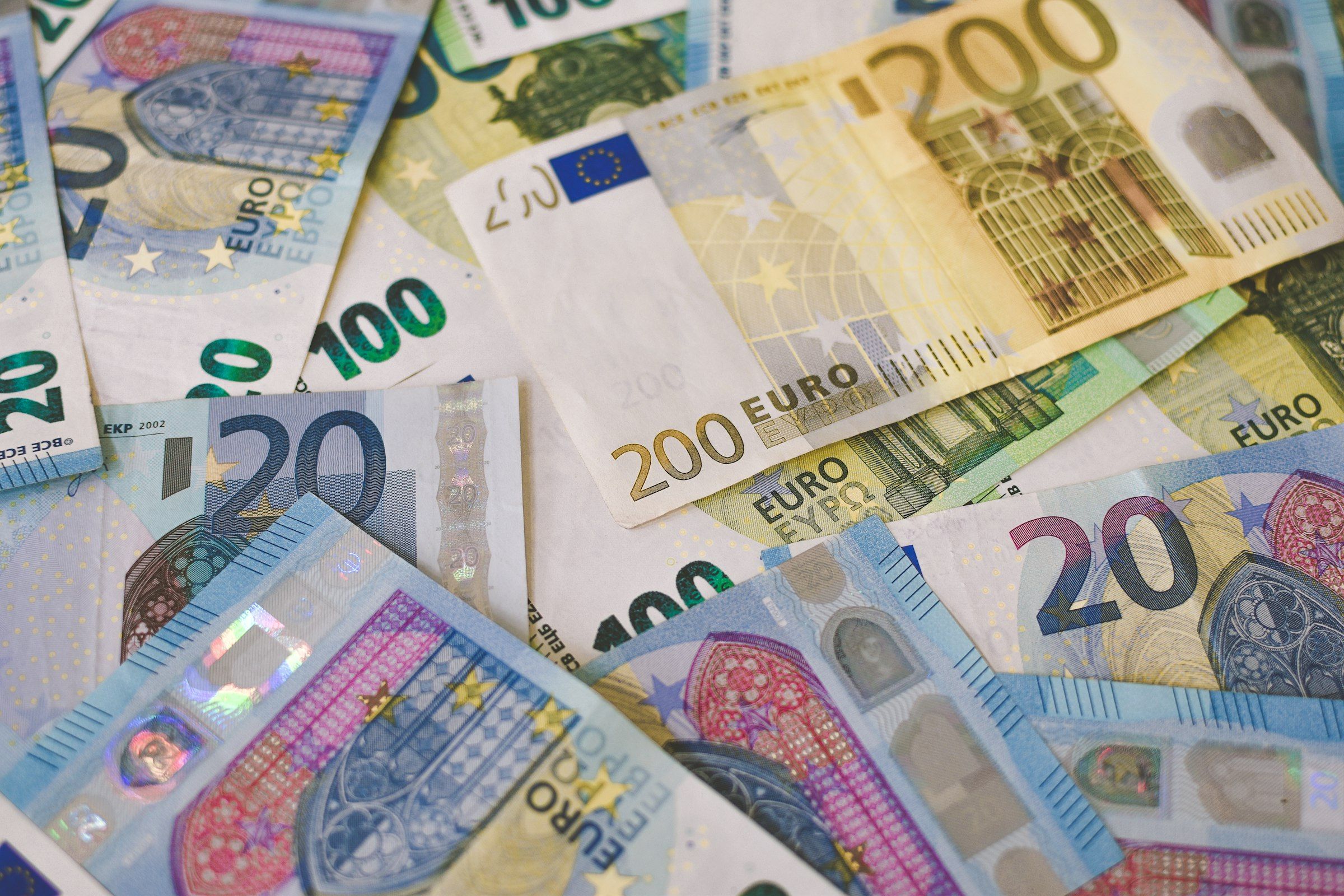
On the Greek islands you pay in euros, cards are accepted almost everywhere, and an EU SIM works at home prices. The catch for anyone based on the Turkish coast is the reverse trip: Turkey is outside EU roaming, and phones near the shore on both sides often latch onto the other country’s network without you noticing. Carry a little euro cash, always pay in EUR rather than your home currency, and set your phone’s network manually.
Short answer
- Cards: Visa and Mastercard work widely. Greek law requires nearly all businesses, including taxis and kiosks, to have a card terminal.
- Pay in euros: When a terminal or ATM offers to charge you in pounds, kroner or lira, decline and choose EUR.
- Cash: Keep small notes and coins for tavernas, beach kiosks and tips. Cash of €10,000 or more must be declared when entering or leaving the EU. Turkey’s threshold is the same in euros.
- EU SIMs: Roam like at home applies in Greece but not in Turkey. Charges you dodge on the island can hit you on the Turkish side.
- UK SIMs: Free EU roaming is no longer guaranteed. EE, Vodafone and Three charge a daily fee on many plans.
- Turkish SIM in a foreign phone: It usually works for up to 120 days before the handset must be registered. Check the current rule.

Paying on the islands
Cards and card terminals
Greece has spent several years pushing card payments to fight tax evasion. Card terminals now have to be linked to cash registers. From April 2024, an extra 35 sectors (about 110,000 businesses, including taxis, kiosks and farmers’ market stalls) were required to accept card payments, with a €1,500 fine for non-compliance. In towns like Mytilini, Chios, Vathy, Kos Town and Rhodes, you can pay by card at supermarkets, restaurants, hotels and ferry ticket offices.
In practice, a small taverna’s terminal may be “not working”, or the driver may prefer cash. Ask before you order or get in, and keep cash as a backup. Contactless and phone wallets are common in the larger towns. On small islands like Kastellorizo or Symi, expect fewer options.
Greek cash payment limit
Greece caps cash payments at €500. Anything above that has to be paid by card, bank transfer or cheque. In May 2026 a bill was reported that would tighten enforcement, with fines of twice the cash amount. The sources do not say whether tourists are treated differently. This rarely matters on a short island trip, but it can matter if you plan to pay a hotel or car hire in cash.
Dynamic currency conversion: always choose EUR
Card terminals and ATMs in Greece often offer to convert the amount into your home currency on the spot. This is dynamic currency conversion (DCC). The exchange rate is set by the merchant’s or ATM operator’s provider and is usually worse than your bank’s.
EU Regulation 2019/518 requires whoever offers the conversion to show, before you pay, the total you’ll be charged in your own currency and the conversion charge as a percentage mark-up over the European Central Bank reference rate. That makes the cost visible, but it doesn’t stop the offer. Choose EUR every time and let your card issuer do the conversion. If a waiter picks the option for you, look at the screen yourself.
ATMs and withdrawal fees
Main island towns have ATMs run by Greek banks (Piraeus, Alpha, Eurobank, National Bank of Greece) as well as independent operators such as Euronet. Smaller islands may have only one or two ATMs, which can run dry on busy summer weekends.
Greece cut ATM fees in August 2025, but only for holders of Greek bank cards. Foreign cards still pay whatever the ATM operator charges. Wise’s guide (updated June 2024) puts typical foreign-card fees at about €2–4 per withdrawal. Your own bank may add its fee on top.
- Read the fee screen before confirming. If it’s high, cancel and try a bank-branded ATM.
- Decline the “we’ll convert for you” offer (that’s DCC again).
- Make fewer, larger withdrawals rather than many small ones.
- Avoid cash withdrawals on a credit card, which usually count as cash advances and carry extra charges.
A card with low or no foreign-transaction fees (many app-based banks and some travel cards offer this) makes the biggest difference. Check your own card’s terms. Fees vary too much to generalise.
How much cash to bring
On a day trip, a modest amount of euro cash in small notes and coins covers coffee, a kiosk snack, a sunbed, tips or a taxi whose terminal is “down”. For a few nights, pay big items by card and keep cash for small ones. Use the trip cost calculator to estimate your budget.
If you’re staying in Turkey and need lira as well, the two currencies don’t mix. Lira is hard to change on the islands, so don’t plan on spending leftover lira there.
Cash limits at the border
| Where | Rule (as of October 2026) |
|---|---|
| Entering or leaving the EU (Greece) | Declare cash of €10,000 or more (or the equivalent in other currencies). The threshold applies per person, not per group. “Cash” includes banknotes, bearer cheques, traveller’s cheques and certain gold. |
| Leaving Turkey | Declare foreign currency over €10,000 or equivalent, and Turkish lira over 25,000 TL. |
These are declaration thresholds, not bans. You can carry more if you declare it. In Turkey, undeclared or wrongly declared cash can be seized and reported to the financial crimes unit (MASAK).
Mobile phones and data
EU SIMs: free in Greece, expensive in Turkey
Under EU roaming rules, a SIM from any EU country, Iceland, Liechtenstein or Norway (and since January 2026, Ukraine and Moldova) can be used in Greece at domestic prices, subject to fair-use limits. Turkey is not part of this zone. Most EU operators charge a separate, much higher rate there, or require a Turkey add-on.
The trap on this coast is distance. From Kuşadası, Çeşme, Bodrum or Kaş, the Greek islands are only a few kilometres away. A phone on automatic network selection can switch between Turkish and Greek networks depending on where you stand:
- German or Dutch SIM on the Turkish coast: Picking up a Greek network is good news (EU prices). Picking up a Turkish network means non-EU roaming rates. Check your operator’s Turkey tariff before you go.
- Turkish SIM on the Turkish coast: It can latch onto a Greek network. In a complaint posted in February 2026, a Turkish customer near Kaş was charged about 400 TL for 0.28 MB of Greek data.
- Any SIM on the ferry: Ships and planes sometimes use satellite or maritime networks. These are not covered by roam like at home and can be very expensive. The European Commission says you should get an automatic alert, with service cut off at €50 of extra charges unless you choose otherwise.
What to do: set network selection to manual and pick the network you intend to use. Turn data roaming off when you don’t want it. Check your operator’s app for usage alerts.
UK SIMs
Since Brexit, free roaming in the EU is no longer guaranteed for UK customers. According to a comparison updated in October 2026, EE, Vodafone and Three charge a daily EU roaming fee on many plans (roughly £2–3 a day), while O2 and giffgaff list no extra cost. Check your own plan. Older contracts and some bundles include EU roaming.
The UK government says UK law still requires operators to apply a default £45 monthly cap on mobile data spending abroad, with alerts at 80% and 100%. Turkey is not in the EU, so most UK plans price it separately. Check what your operator charges for Turkey, since you’ll spend most of the holiday there.
eSIMs
If your phone supports eSIM and isn’t locked to a network, a data-only eSIM for Greece or “Europe” from an international seller such as Airalo is often the simplest option for a short hop. It installs in minutes and keeps your home number active. Some regional plans cover both Greece and Turkey, but check the country list before buying. Install it over Wi-Fi before you sail. Prices change too often to quote here.
Greek SIM cards
The main Greek networks are Cosmote, Vodafone Greece and Nova (formerly Wind). Prepaid SIMs require ID. You’ll need to show a passport so the seller can register the number in your name. Shops are in the main towns (Mytilini, Chios, Kos, Rhodes) but scarce on small islands. For a stay of a few days, an eSIM is usually less hassle.
Using a Turkish SIM in your own phone
If you base yourself in Turkey and buy a Turkish SIM, note that Turkey limits how long a phone bought abroad can be used on Turkish networks without registration. According to Turkey Travel Planner (updated July 2026), visitors get 120 days. After that the handset must be registered for a fee (57,241 TL from 1 January 2026), or it gets blocked on Turkish networks. The same source says the 120-day limit also applies to foreign SIMs on roaming. Official confirmation of that point was not available to us, so check with a Turkish operator if you stay long. For a typical one- or two-week holiday this won’t affect you.
Wi-Fi
Most hotels, guesthouses, cafés and restaurants in island towns offer free Wi-Fi. Some ferries do too, but coverage drops at sea. Download maps and your ferry booking before you leave port, and avoid banking on open networks. See the ferry map for routes and crossing times.
FAQ
Can I use my card everywhere on the Greek islands?
Almost. Greek law requires most businesses, including taxis and kiosks, to accept cards. Still, terminals at small tavernas or in villages sometimes fail. Carry some euro cash as a backup.
Should I pay in my home currency or in euros?
In euros. The home-currency option is dynamic currency conversion, and its exchange rate is usually worse than your card issuer’s. Choose EUR on card terminals and ATMs.
Does EU free roaming work in Turkey?
No. Roam like at home covers the EU and EEA, plus Ukraine and Moldova. Turkey is outside it. Your EU SIM will work in Greece at home prices but may cost far more on the Turkish side, including when your phone picks up a Turkish network near the coast.
How much cash can I carry between Turkey and Greece?
You must declare €10,000 or more when entering or leaving the EU. Turkey requires declaration of foreign currency over €10,000 (or equivalent) and lira over 25,000 TL when leaving. Larger amounts are allowed if declared.
Do Greek ATMs charge foreign cards?
Usually, yes. The 2025 fee cuts apply only to Greek bank cards. Foreign cards typically pay about €2–4 per withdrawal at the ATM, plus any fee from your own bank. The fee appears on screen before you confirm.
Is an eSIM better than a Greek SIM for a short trip?
For a day trip or a few nights, usually yes. An eSIM needs no shop visit and no passport registration. A Greek prepaid SIM can make sense for longer stays, but you’ll need your passport to buy one.
Route guides: Bodrum to Kos, Kuşadası to Samos, Çeşme to Chios, Marmaris to Rhodes, Kaş to Kastellorizo.
Rules change; confirm with the official source before you travel.
Sources
- European Commission: EU cash controls (accessed Oct 2026)
- Turkish Ministry of Trade circular 2024/1 on cash controls at customs (Lexpera consolidated text) (accessed Oct 2026)
- European Commission: Roaming policy (accessed Oct 2026)
- Malta Communications Authority: Roam Like At Home countries (accessed Oct 2026)
- GOV.UK: Using your mobile in EU and EEA countries (accessed Oct 2026)
- Ken’s Tech Tips: European roaming for UK networks (accessed Oct 2026)
- To Vima: Fines for Greek businesses without POS systems from April 1 (March 2024) (accessed Oct 2026)
- in.gr: Greece makes POS mandatory, linked to cash registers (January 2023) (accessed Oct 2026)
- European Consumer Centre Germany: Cash payment limits in Europe (accessed Oct 2026)
- To Vima: Greece tightens cash rules with double fines (May 2026) (accessed Oct 2026)
- Regulation (EU) 2019/518, recitals (accessed Oct 2026)
- To Vima: Greek ATM fee cuts from August 11 (August 2025) (accessed Oct 2026)
- Wise: ATMs in Greece (accessed Oct 2026)
- Şikayetvar: complaint about Greek-network roaming charge near Kaş (February 2026, Turkish) (accessed Oct 2026)
- Turkey Travel Planner: Registering mobile phones in Turkey (accessed Oct 2026)
- Yesim blog: Mobile internet and SIM cards in Greece (accessed Oct 2026)